Describe what happened
Share the observations you have, including the storm date if known and when you first noticed the problem.
Arlington, TX
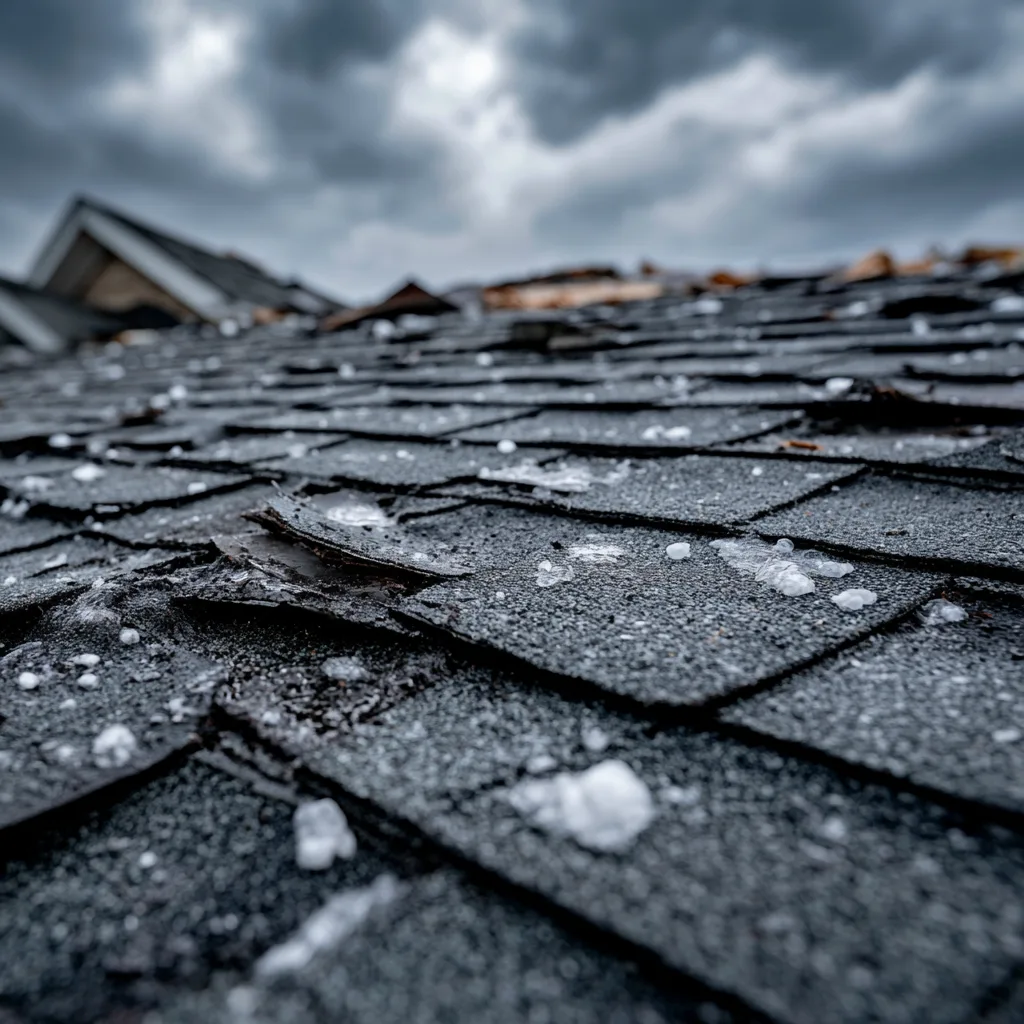
Hail in the yard leaves a question over the roof. A free inspection puts a roofer up there to check the covering and explain what needs attention.
Missing shingles are easy to spot after wind. A fracture in a shingle mat or an opened flashing joint takes a closer look. Our roofer checks those details and the material around them, then works through whether the damage calls for a repair or a broader replacement.
Let us know whether water’s coming in and what you’ve noticed since the storm. Two roofs on the same block can have different findings, so the work follows your roof’s condition.
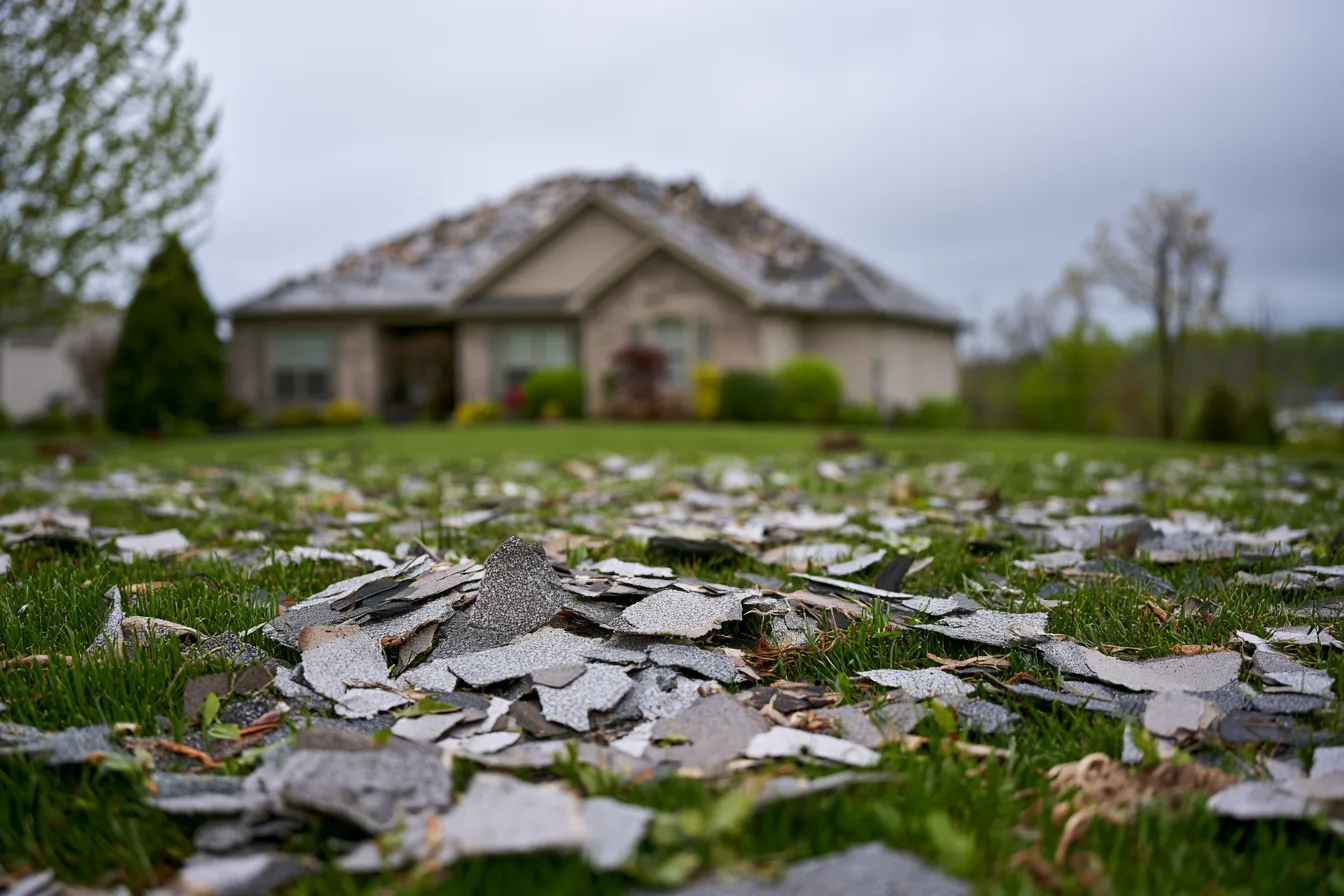
Hail can damage the mat beneath a shingle’s granules; wind can crease or tear the covering. The roofer separates those failures from wear and other marks, then checks how far the damage runs.
Vent caps, pipe details and chimney flashing can need attention separately from the shingles.
Wind can lift exposed edges. A gutter knocked loose can spill runoff behind the fascia. These details need their own repairs when damaged, even if the main shingle field can stay.
Opening a damaged area may reveal additional work beneath the covering. Discuss how that possibility will be handled.
Share the observations you have, including the storm date if known and when you first noticed the problem.
Our roofer examines the damage and the surrounding roof. The inspection gives you a repair question to discuss, instead of choosing a new roof because other houses are getting one.
A localized repair may be suitable. Broader damage or a roof that can’t support a sound repair can make replacement worth discussing.
Review the scope and price with the roofer. For an insurance claim, separately confirm the carrier’s decision, deductible and payment requirements.
Replacing a few damaged components and replacing a whole roof require different amounts of work. The covering, access, roof shape and conditions beneath it all affect the proposal. Our cost guide provides attributed regional replacement ranges for planning.
If insurance is involved, an accepted claim does not eliminate your deductible or make every additional repair covered. The insurance guide explains the policy and construction questions to keep in view.
Our Arlington storm archive keeps the original NOAA dates and reported locations. A date can help with the history you give your insurer. It can’t identify which storm made a particular mark on your roof.
A mark on soft metal can inform an inspection, but it doesn’t automatically date damage or prove a shingle needs replacement.
The absence of an indoor leak does not show every detail of the covering.
Ask the insurer about the policy’s notice requirements. Do not wait for an arbitrary post-storm interval before taking the concern seriously.
No. The findings, extent of damage and repairability of the existing assembly determine the roofing options.
An impact-rated product can be worth comparing when replacement is planned. The rating is a test result, not a hail-proof promise. Ask the carrier separately about any applicable premium discount and coverage terms.
Yes, you can request an inspection. Later weather and wear may make attribution harder. Ask the insurer promptly about any claim requirement; the timing article explains the different deadlines.
No. The roofer can explain the physical findings and repair scope. The insurer applies the policy to the claim.
Arlington Roofsmith
A few missing shingles, dents after hail or water inside all give us somewhere to start. Request a free inspection and find out what the roof needs next.
(817) 650-1526