Review the leak history and access
Include previous repairs, when water appears and any equipment or tenant constraints.
Arlington, TX
A low-slope roof leak needs a diagnosis of the membrane, its connections and what lies beneath. A localized defect may be repairable even when the water shows up some distance away.
Water can travel along a deck or through layers of the roof before reaching a ceiling. The indoor wet spot is a useful starting point, but it doesn’t locate the entry by itself. Our roofers can examine the relevant seams, flashings, penetrations and drainage.
For an occupied building, explain what is below the affected area and how roof and indoor access can be arranged. Temporary protection may be needed before permanent work when weather or the extent of damage limits the first visit.
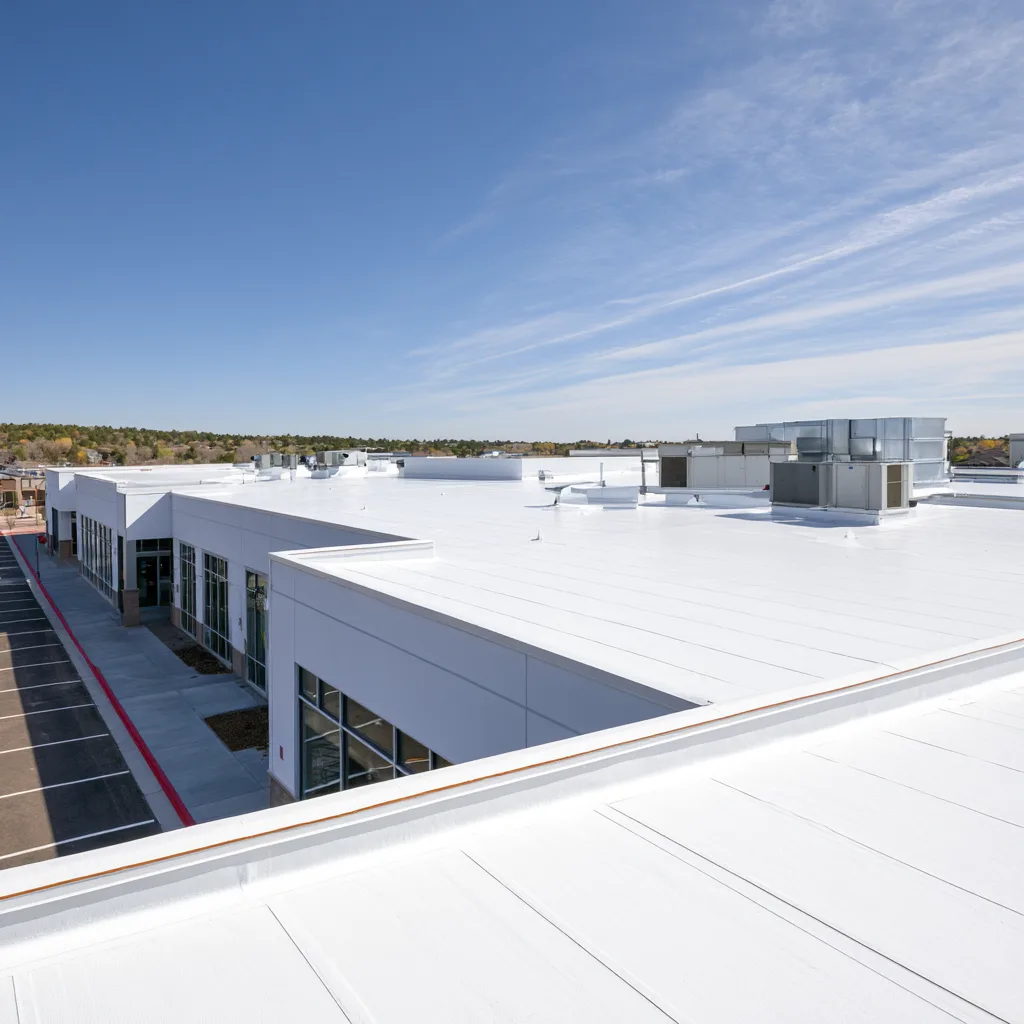
TPO, EPDM, modified bitumen and other assemblies do not use interchangeable repair products or methods. Identify what is on the roof before applying another coating or patch.
Open joints, punctures and damaged material need a repair compatible with the membrane and its condition.
The roof-to-wall transition and termination have to keep water out as materials move.
Blockage, damaged connections or unsuitable levels can interrupt drainage. The cause determines the correction.
Pipes, conduits and equipment connections introduce details that need individual examination.
Where moisture is suspected beneath the membrane, further investigation may be needed to define removal and repair.
Include previous repairs, when water appears and any equipment or tenant constraints.
Look beyond the visible wet area and record what can be established from accessible conditions.
Discuss any proposed test or opening and how it helps define the work.
Use the method and components appropriate to the existing system. Identify any temporary work separately.
A repair addresses its stated scope. Understand any condition outside it that still needs attention.
Water that repeatedly remains in the same area after rain can point to a blocked outlet, an unsuitable slope or another assembly problem. A patch over the membrane does not change the water’s route. The system’s requirements and the building’s drainage need to be considered together.
The outlet and the drainage path need attention, including safe access for maintenance.
They can show where water has collected, even when the roof is dry at the inspection.
Assess the membrane and what supports it rather than treating appearance alone.
Movement or deterioration may need investigation beyond a surface repair.
A seam repair, a rebuilt curb and replacement of wet insulation are different scopes. Access, membrane compatibility and the extent of concealed damage affect the price. A national average can’t resolve those differences on your building.
Repeated failures across the roof can make a broader flat-roof replacement worth comparing. A sound, suitable roof may instead be eligible for coating. Neither choice follows automatically from the number of previous patches.
Yes. Our roofers can assess residential low-slope roofs as well as commercial buildings. The covering, drainage and connection to the main roof determine the work.
The substrate must meet the coating system’s requirements. Concealed moisture, deteriorated material and drainage problems need investigation before coating is considered.
Check the actual warranty and its requirements for repairs, contractors and notification. If coverage is active, establish the appropriate process before changing the assembly.
It depends on the location, hazards and work. Discuss access, protection, equipment and any necessary restrictions before scheduling. Continued occupancy is a planning question, not a blanket promise.
Arlington Roofsmith
Tell us where the water appears, the roof system if known and any access constraints. Our roofers can help establish the repair scope.
(817) 650-1526