Review when the water appears
The affected room and rain pattern help direct the inspection. Share previous repairs if known.

Arlington, TX
Water beside a chimney can come through its roof connection or through the chimney itself. The repair starts by finding which path is letting it in.
A chimney interrupts the roof’s slope. Flashing connects the covering with the chimney and directs water around that interruption. On a shingle roof, step flashing commonly follows the courses at the sides, with counterflashing protecting the upper edge.
Leaks can also originate at a crown, cap, masonry joint or another chimney component. Our roofers can assess the roof connection and explain when a chimney or masonry specialist needs to be involved.
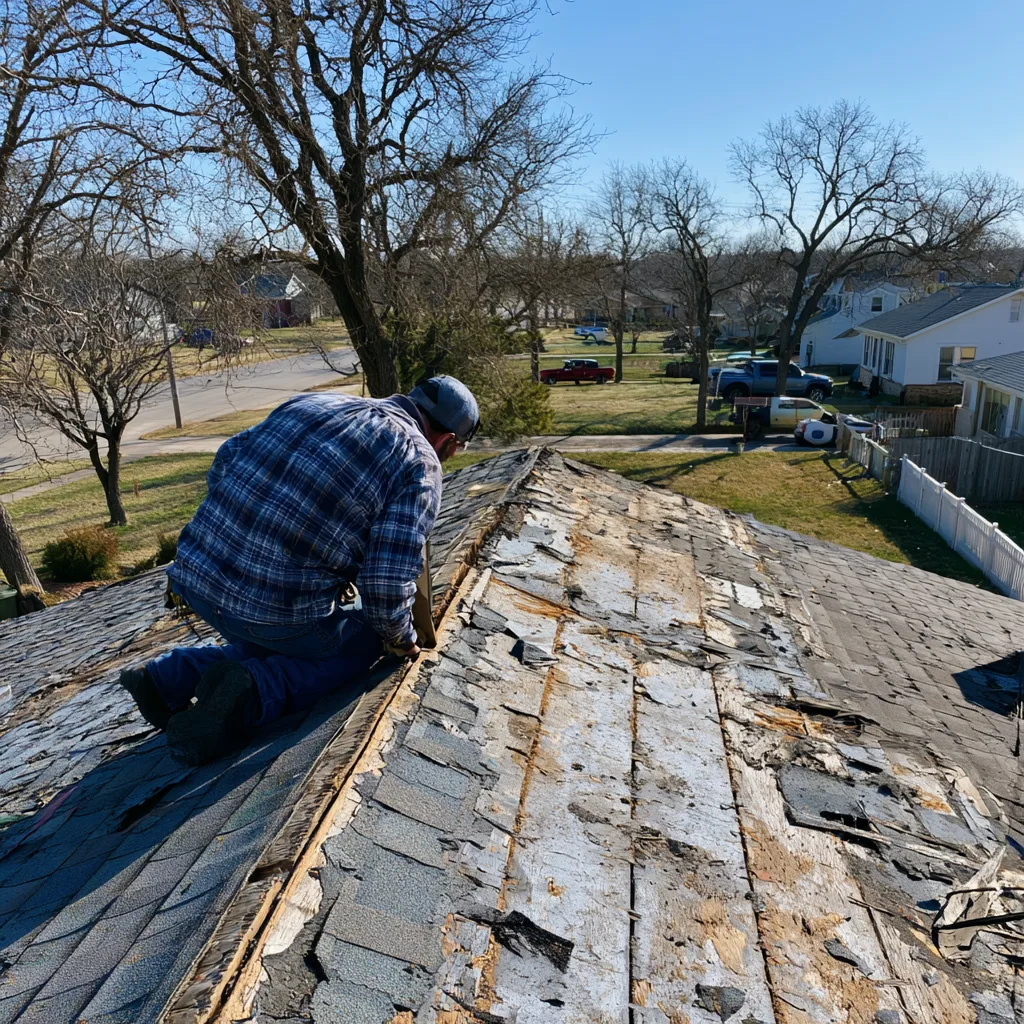
Previously reused flashing is not automatically defective. Its condition, compatibility and installation determine whether it can remain.
Sound, correctly arranged metal may need maintenance at a specified joint. Sealant can’t substitute for missing or unsuitable flashing.
Split, corroded or displaced pieces may need replacement with the surrounding covering opened as necessary.
Incorrect laps or a poorly integrated detail may need rebuilding rather than another surface patch.
Deteriorated deck, masonry or structural concerns need a defined scope and the appropriate trade.
The affected room and rain pattern help direct the inspection. Share previous repairs if known.
Assess the flashing and adjacent roof, keeping other water paths in view.
Clarify which metal, shingles and concealed materials the work includes.
Install the specified flashing arrangement and integrate it with the surrounding roof.
Understand any masonry work or other condition outside the roofing repair.
Staining near the chimney, damp masonry or visibly displaced metal are reasons for investigation. Their appearance alone does not prove which component failed. Condensation and rain entry can also need to be distinguished.
Repeated caulking without a clear diagnosis can leave the original route open. If the source is uncertain, leak tracing can help connect the indoor evidence to the roof and chimney details.
Chimney size, roof slope, access and the flashing arrangement influence the work. A limited repair on sound material is different from opening several courses and replacing damaged decking.
Ask what is included at the roof and what requires separate masonry or chimney work. Agree on how concealed findings will be handled before they become an unexpected part of the bill.
The roof-to-chimney flashing is roofing work. A crown, flue, cap, deteriorated masonry or structural chimney problem may require a specialist. Some leaks need coordination between trades.
Sometimes, if the underlying material and arrangement are sound and the specified detail uses sealant there. Damaged or missing flashing needs more than a surface bead.
Assess it as part of the replacement scope. The condition, compatibility and ability to integrate it correctly determine whether it may remain.
Ask for the coverage offered for the specific work and its limits. Repairing the roof connection does not establish the condition of the entire chimney or roof. The warranty guide explains how to read the terms.
Arlington Roofsmith
Describe the staining, the rain conditions and any previous flashing work. Our roofers can assess the connection and discuss the repair.
(817) 650-1526