Keep clear of unsafe areas
Stay away from bulging ceilings, fallen limbs and water around wiring or electrical equipment. Do not enter a hazardous area to collect evidence.
Arlington, TX
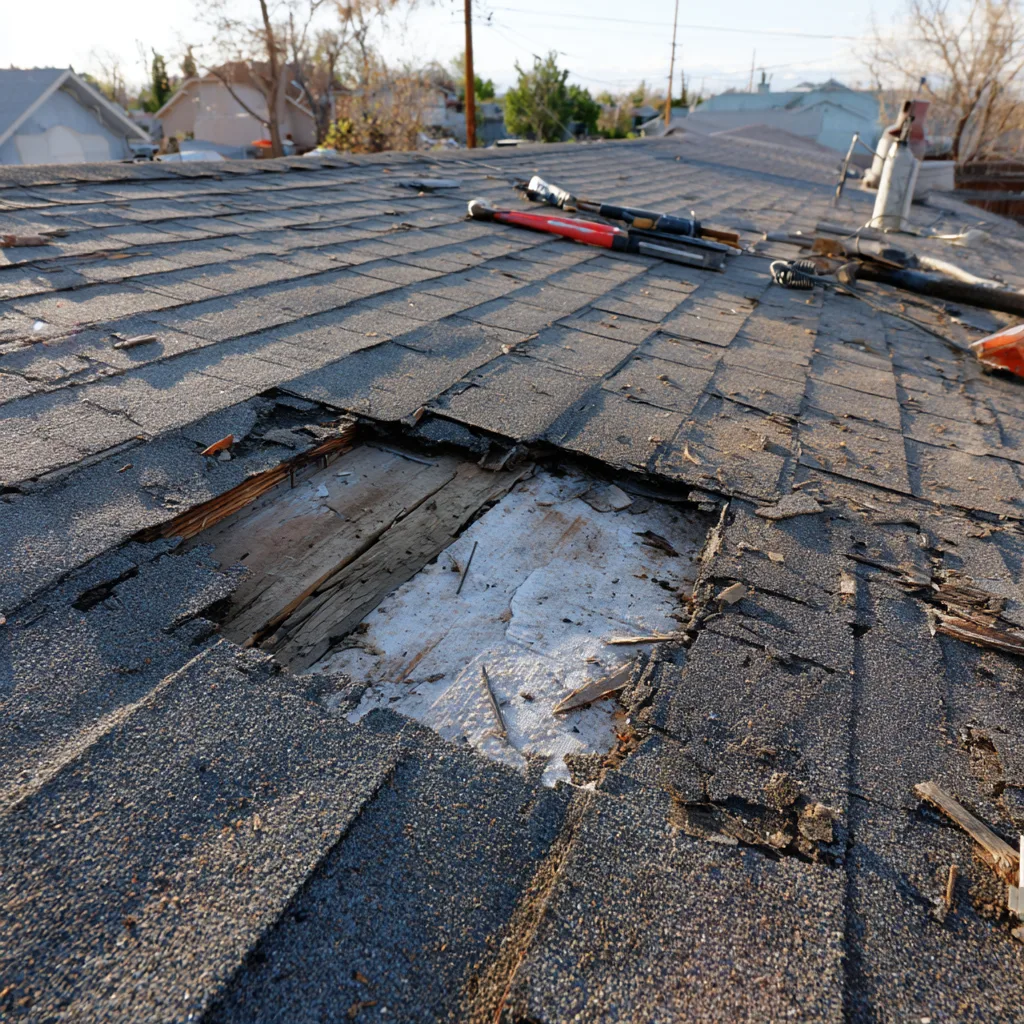
If water is coming in or a storm has opened the roof, tell us what is happening and ask about the earliest available help. Keep people clear of the affected area while you arrange it.
An active roof leak can damage ceilings, insulation and belongings. Sagging material, broken branches and water near electrical equipment can also make the area unsafe. Move away from those hazards and seek emergency services if there is immediate danger.
Do not climb onto a wet or damaged roof. Our roofers can assess whether temporary weather protection is appropriate and when conditions allow the work. Ask about current availability when you call; a form submission does not confirm an emergency appointment.
A tarp or other temporary measure can limit further exposure when it can be installed safely and secured to suitable material. It has limits, especially with further wind or damage beneath the covering.
Identify where the covering is missing or water is entering, without assuming the visible opening is the only damage.
Weather, slope, height and the condition of the structure affect whether work can proceed.
The damaged assembly and available attachment determine what protection is practical.
Temporary work and permanent restoration are separate scopes. Clarify what remains to be inspected and repaired.
Stay away from bulging ceilings, fallen limbs and water around wiring or electrical equipment. Do not enter a hazardous area to collect evidence.
Move accessible belongings away from the leak. A container can catch drips if the ceiling above it is sound and the location is safe.
Say whether water is entering now, a tree is involved or part of the roof is exposed. Ask when help is available.
Keep photos you can take safely and receipts for reasonable protective work. Your insurer can explain its documentation requirements.
Once conditions allow, establish the repair scope beyond the temporary covering.
Missing material or an exposed roof plane can need weather protection even before the full damage is known.
Describe which rooms are affected and whether it changes with rainfall.
Keep clear of the damaged area. Roofing work may depend on safe removal and assessment of the structure.
Report the change and avoid trying to secure it yourself on the roof.
For a leak with no obvious storm opening, leak tracing explains how the entry point is investigated.
Temporary protection depends on the exposed area, access, weather and the damage around it. Permanent repair may need additional investigation once the roof can be examined safely. Ask what each price includes and whether further work needs separate approval.
If you plan to make an insurance claim, contact your insurer promptly about protective measures, documentation and policy requirements. Coverage and reimbursement are policy decisions; our claim guide explains the questions without promising a result.
Covering an opening addresses immediate exposure. It doesn’t evaluate every seam, flashing, deck section or area of hidden moisture. The permanent assessment should look beyond the tarp and account for the condition of the remaining roof.
Keep the temporary-work information with the later repair proposal. That makes it easier to see what has already been done and what the permanent scope still needs to include.
Keep people out from beneath it and seek urgent assistance. Do not puncture it or try to support it yourself. If there is immediate danger, contact emergency services.
Call to ask about current availability and explain the situation. Weather, safe access and the work required affect response. Do not rely on a submitted form as confirmation that help is on the way.
It depends on the method, attachment and weather. Arrange the permanent assessment promptly and ask what monitoring or follow-up the temporary work needs.
No. The permanent decision depends on the damage and the condition of the remaining roof. A localized opening and a broadly deteriorated covering can call for different work.
Arlington Roofsmith
Tell us whether water is entering, material is missing or an impact has damaged the roof. That information helps our roofers understand the help you need.
(817) 650-1526