Measure the layout
Identify the lengths, corners, outlets and suitable discharge points.
Arlington, TX
Overflowing, leaking or sagging gutters need a look at the whole water path. We can help you work out whether the problem calls for a repair, a new run or attention behind it.
Water over the front of a gutter can come from a blockage, poor slope or inadequate capacity. Water behind it can point to the roof-edge connection. A run pulling away may have a fastening problem or damaged fascia. Those are different repairs.
Describe what happens during rain and where you see it. Our roofers can assess the gutter, its support and the connection to the roof before recommending replacement. A dent by itself does not tell you that the whole run needs to come down.
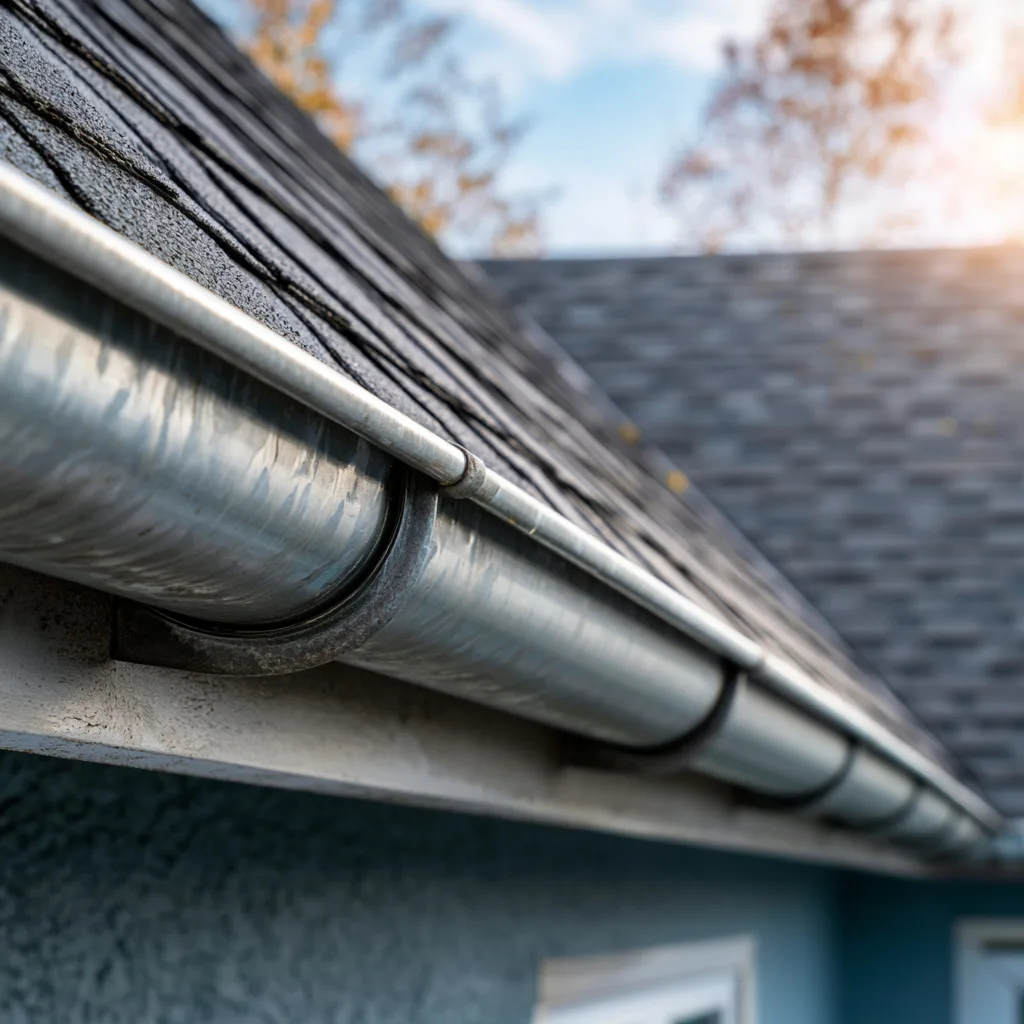
A seamless gutter is formed in long runs, reducing joints along the straight lengths. Corners, end caps and outlets still need appropriate connections. The size and layout have to suit the runoff arriving from the roof.
Compare the proposed capacity with the roof area and layout. A larger trough alone does not correct every overflow.
Their size, number and placement affect how quickly water can leave the run.
The gutter needs secure attachment to suitable material with the intended slope toward its outlets.
The roof covering and metal details should direct water into the gutter rather than behind the fascia.
Confirm the specified material, thickness and finish rather than comparing color alone.
Identify the lengths, corners, outlets and suitable discharge points.
When a run comes down, the condition of the fascia behind it becomes easier to examine.
Soft or split material may need repair before the gutter can be attached securely.
Install the agreed components with suitable support and slope.
Review the connections and discharge arrangement, including any ground-level issue that needs separate attention.
The job does not end where a downspout stops. Water should discharge in a suitable direction without concentrating against the building or creating another drainage problem. The property’s grading and outlets affect the answer.
Displaced mulch or exposed soil can show where discharge is concentrated.
A shifted splash block or unsuitable grade can send runoff back toward the wall.
Look at the contributing roof area, slope and outlet, as well as possible debris.
Stained or soft fascia deserves investigation. See soffit and fascia repair.
Length is part of the price, but height, corners, downspouts, access and fascia repairs also matter. A short repair on sound support and replacement of a failing run are different scopes.
Ask what is included at the roof edge and where the downspouts will discharge. If the gutter itself is serviceable and the problem is a blockage or a separate drainage issue, a larger replacement may not solve it.
The attachment, fascia condition, slope and loading all need a look. Refastening into damaged material can leave the cause unresolved.
It can be useful to coordinate the work when both need attention. The roof-edge connection and protection of existing gutters should be part of the plan. Sound gutters do not automatically need replacement with every roof.
Not necessarily. Blocked outlets, downspout problems and poor slope can also cause overflow. Have the cause checked before choosing a larger run.
A dent may be cosmetic, while a crushed outlet, broken connection or distorted run can affect drainage. The inspection should distinguish those conditions.
Arlington Roofsmith
Describe the overflow, leak or sag and where it happens. We can help you understand the roof-edge work that will address it.
(817) 650-1526