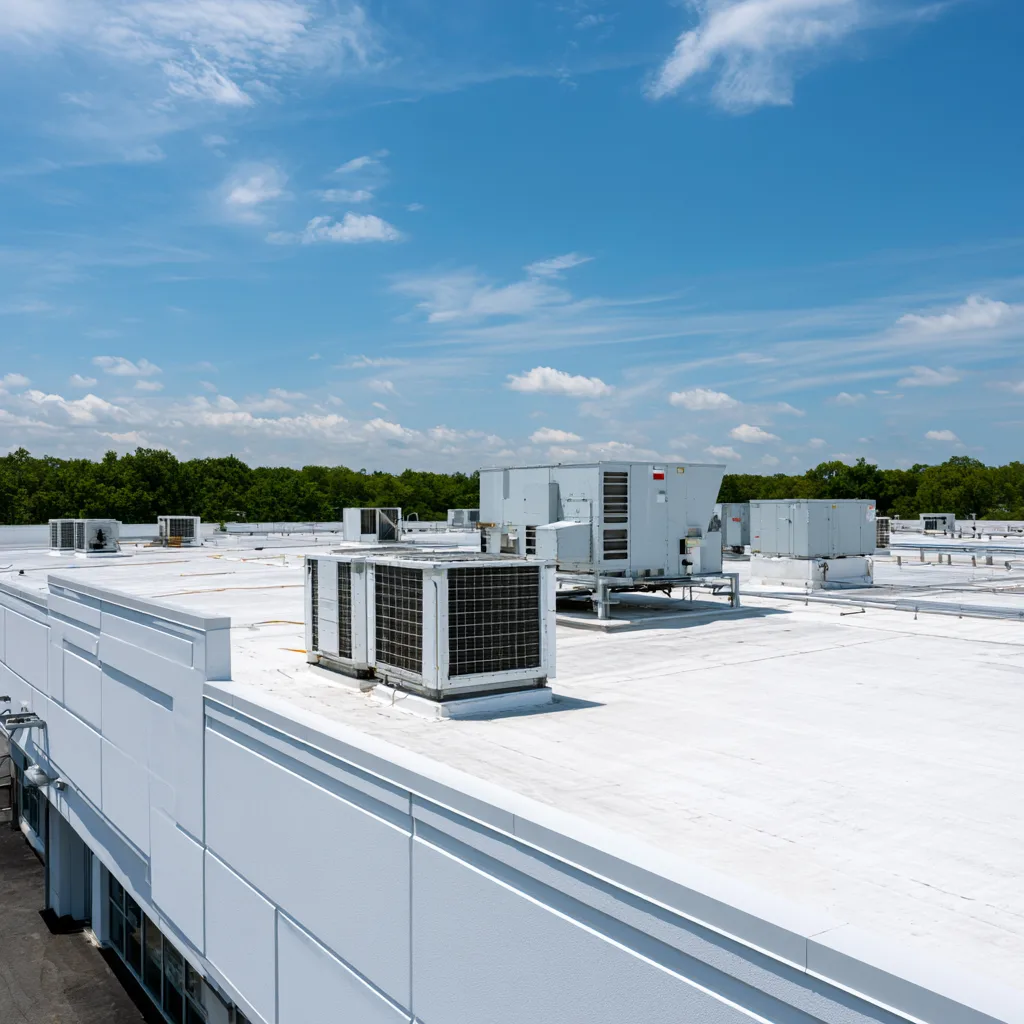
Rows of HVAC units across a large white commercial roof

Arlington, TX

TPO Roofing in Arlington, TX

A new TPO sheet won’t solve wet insulation or a drain that leaves water trapped. Our roofers assess the existing roof and work through the membrane, attachment and details as one assembly.

Put a number on a TPO roof

Start with the property and the roofing help you need.

The welded membrane is one part of a TPO roof

TPO is a thermoplastic roof membrane supplied in rolls. Heat-welded seams join the sheets, while compatible flashings address curbs, walls, pipes and drains. The finished system needs to work across the open roof and at every interruption.

A light-colored surface can reduce solar heat absorption, but it doesn’t establish a particular energy saving for your building. Insulation, climate and building operation also matter. First decide whether replacement is warranted, then compare a specification that fits the roof.

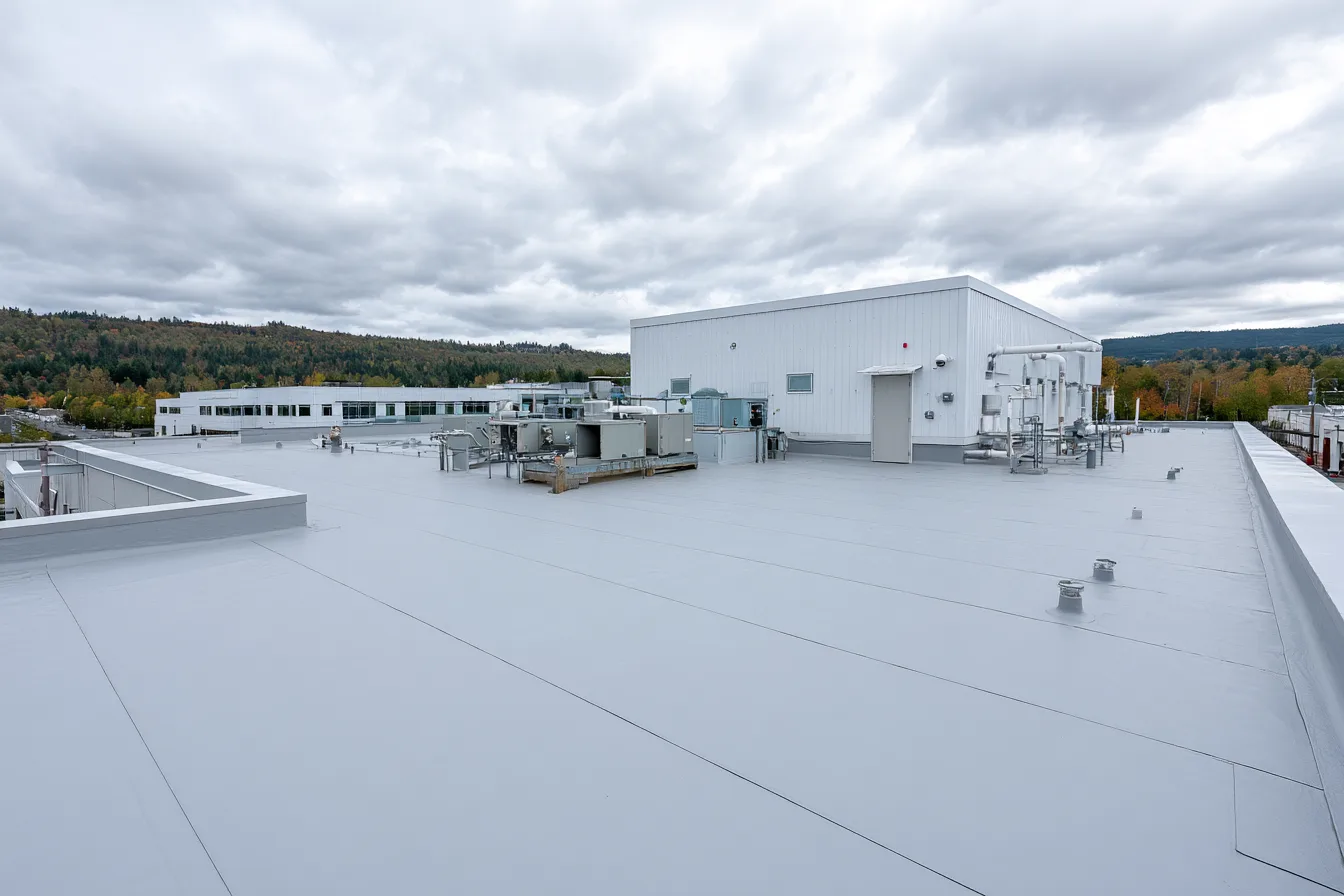
Gray flat roof with mechanical equipment under an overcast sky

Attachment and thickness belong in the specification

The deck, wind requirements, manufacturer’s assembly and project conditions determine suitable attachment options. The method is part of the design, not a detail to leave unnamed.

Mechanically attached

Fasteners and plates secure the assembly according to the specified pattern. Edge and corner requirements can differ from the open field.

Adhered systems

An adhesive or a proprietary approved attachment system bonds the membrane to a suitable substrate. The complete assembly still has attachment requirements below the sheet.

Other approved assemblies

Induction-welded and other manufacturer systems may fit a project. Compare their full details rather than assuming every TPO membrane supports every method.

Membrane thickness

Thickness is one part of the specification. The cover board supports the membrane, and walkways protect it where people service equipment. Compare those parts together with the product and program requirements.

Insulation and cover board

These layers help form the substrate and thermal assembly. Tapered insulation may also help create the intended drainage path.

Example: Carlisle’s attachment-system explanation describes how attachment changes an assembly. Product-specific requirements govern.

Detail the installation around the building

A new membrane needs a suitable base beneath it and sound details around the equipment above it. The roofer checks those conditions before setting the work sequence, with access and the use of the building in view.

Assess the existing assembly

If moisture has reached the insulation, the roof’s appearance alone cannot show how much can stay. Investigation establishes the affected areas and whether the proposed recover is suitable, or removal needs to be included.

Prepare the substrate

Soft spots, damaged insulation and loose material cannot simply be hidden beneath a fresh sheet. The agreed repairs create the base for the specified insulation, cover board and membrane.

Install the specified system

Attach the membrane and supporting layers according to the approved design, with weld settings suited to conditions and product instructions.

Complete the flashings

A welded field still needs sound connections at each curb, pipe and drain. The roofer works through those changes in shape with the specified flashings, so an equipment opening does not become a gap in the roof system.

Check the work and close out

Seam checks, inspections required by the project and completion records support the finished assembly. Confirm the maintenance and warranty requirements offered.

TPO roofing questions

Is a thicker sheet always the better roof?

Not by itself. Compare the membrane with its cover board, insulation, attachment, detailing and planned equipment traffic. A thicker sheet does not correct poor seams or an unsuitable substrate.

Can TPO go over the roof already there?

Possibly, if the existing assembly, condition, code and manufacturer requirements permit the proposed recover. The flat-roof replacement page explains why that is an early decision.

What if the building has kitchen or industrial exhaust?

Identify the actual exposure and verify the membrane manufacturer’s compatibility requirements. A different system or specific protective detail may be more suitable.

What coverage is available?

The manufacturer may offer different material or system programs with eligibility requirements. Ask which exact program is included and whether the proposed contractor and assembly qualify. Do not assume an enhanced guarantee comes with every TPO installation.

What drives the installed cost?

Roof size, removal, insulation, attachment, deck repairs, access and the number of details all contribute. Compare the full scope rather than pricing only the membrane roll.
Arlington Roofsmith

Compare a TPO specification for your building

Share the property, existing roof and the project you’re considering. Our commercial roofers can help with the assessment and the system choices that follow.

(817) 650-1526

Put a number on a TPO roof

Roof repair, replacement, storm damage or a question about the roof.

Call (817) 650-1526Request roofing help